When the Work Becomes Personal
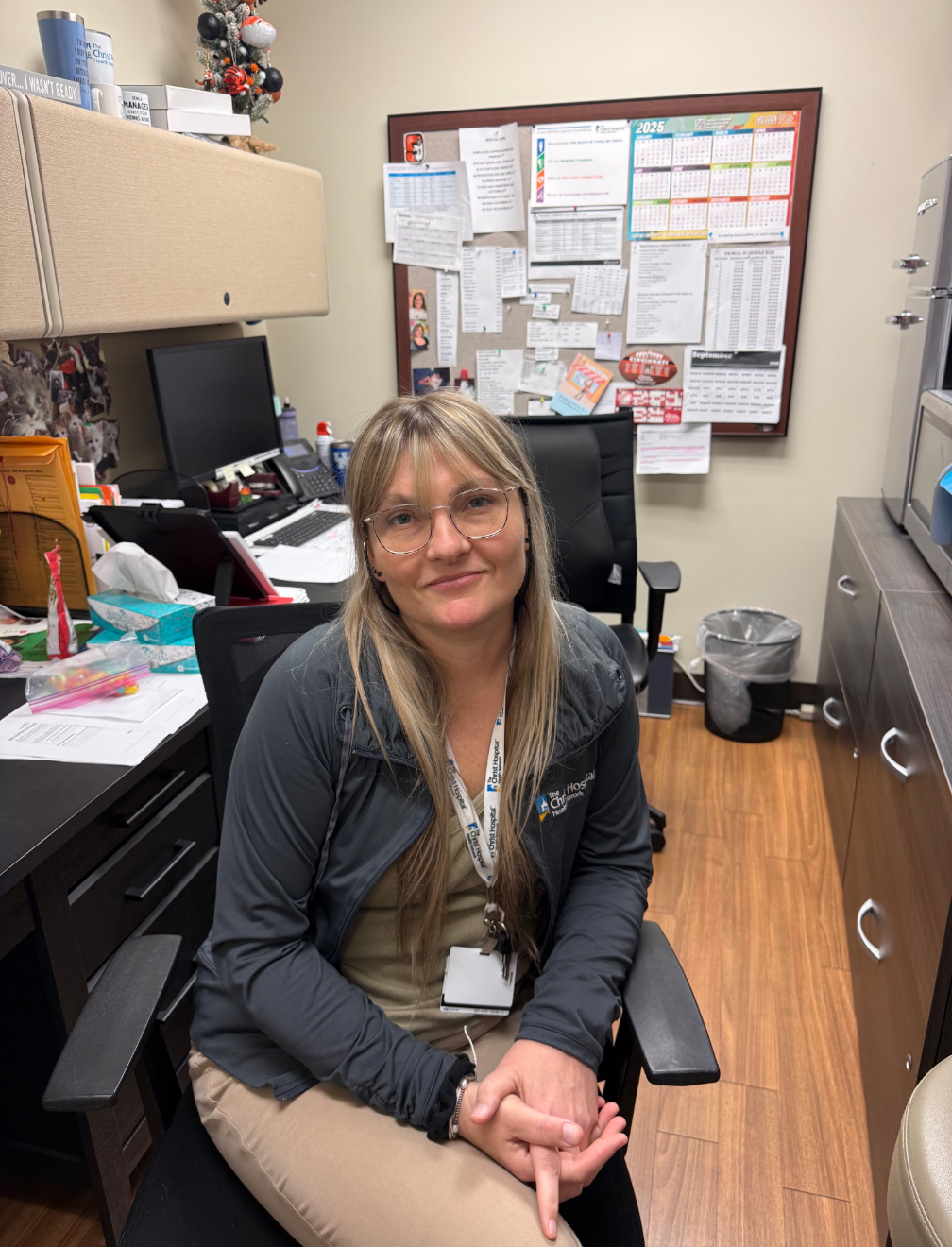
About Tabetha: Tabetha Foster is a registered nurse and Practice Administrator at The Christ Hospital Health & Aging Center Outpatient Behavioral Health, where she has worked for more than a decade alongside individuals living with dementia and their families. A longtime professional partner and friend of Giving Voice Foundation, Tabetha brings humor, candor, and a deep concern for the gaps families encounter throughout the dementia journey. Her professional work has become increasingly personal since her grandmother’s dementia diagnosis. Tabetha lives in Northern Kentucky with her family.
I’m a nurse, but I always tell people I don’t do “nurse-y things.” My mom was actually the one who encouraged me to go to nursing school. I didn’t want to because I don’t like blood stuff. She kept telling me I could do great things with a nursing background and it didn’t have to involve blood. Turns out, she was right.
I’ve always been fascinated by the brain. Initially, I thought I would work with children, but for more than ten years now, I’ve worked at The Christ Hospital Health & Aging Center. I love it there. The people I work with love their jobs and the work we do.
Working with individuals living with dementia and their families for so many years has given me a front-row seat to both the love and the challenges that come with this disease.
“There are gaps in dementia care that healthcare alone cannot fill.”
One of the things that touches me most is watching spouses – the person standing beside the one they made a commitment to 30, 40, 50 or more years ago. You get to see these incredible love stories and the ways people continue honoring those commitments, even as this disease tries to destroy so much of what they have built together.
But I also see how incredibly hard caregiving at home can be. The burnout is real. The denial that something is wrong can be real. And there are still enormous gaps in awareness, education, and support.
I experienced one of those gaps myself in a place I certainly wasn’t expecting it: the BMV parking lot. A woman hit my car in a crowded parking lot. From my experience, I could see signs that made me concerned she might be living with dementia and probably shouldn’t be driving. But what struck me most was what happened afterward.
She was scared and confused. Police and others arrived, but they didn’t seem to know how to communicate with her or help her through an obviously stressful situation. I remember thinking: these professionals haven’t been trained for this. That experience has stayed with me because dementia doesn’t exist only inside a doctor’s office or a family’s home. People living with dementia are part of our communities, and we need more people who understand how to respond.
“You get to see these incredible love stories and the ways people continue honoring those commitments, even as this disease tries to destroy so much of what they have built together.”
If you ask me what is overrated and underrated in dementia care, I have some thoughts. Overrated? Spending too much time focusing on the past without looking at the challenges that may be ahead. Underrated? First, understanding that this is very serious and hard. And second, paying attention to healthier lifestyle choices and what we can do to potentially reduce our risk.
For a long time, dementia was something I understood primarily through my work. Then my grandma (my Gma) was diagnosed a couple of years ago. Now I see everything through another lens. It has made me more patient and even more passionate about caregivers and their families because I’m not only seeing these conversations happen at work anymore. They’re happening in my own family.
My daughters who are age 10 and 13 ask questions:
“Will Gma forget who we are?” “Does it hurt?” “Why can’t she go to a doctor and have them fix it?”
They ask if people die from dementia. They want to know how someone gets it. And they worry that someday I might get it, too. Those are hard questions, especially because sometimes there isn’t a comforting answer. But I think they are important questions to let them ask. This work has taught me that families need space for all of it…the questions, fear, exhaustion, uncertainty, and even the things people sometimes hesitate to say out loud.
My coworkers and I joke that we could have a “Real Housewives of Christ Health & Aging” because of all the stories we hear from families. There are a lot of stories. Underneath the humor, though, is something I take very seriously: families are carrying a tremendous amount.
That’s also why I appreciate what Giving Voice Foundation provides. There are gaps in dementia care that healthcare alone cannot fill. Families need education, yes, but they also need practical support, connection, and people who understand what this actually looks like day to day.
I’ve spent more than a decade watching families navigate this disease professionally. Now, with my Gma, my family is navigating some of those questions ourselves. The longer I do this work, the more convinced I become that we have to listen to families and be honest about how hard this is. And we have to do a better job of making sure they don’t have to figure it all out alone.
“This work has taught me that families need space for all of it…the questions, fear, exhaustion, uncertainty, and even the things people sometimes hesitate to say out loud.”
Your Voice Belongs Here
Did this story remind you of one of your own?
Whether you’re living with dementia, supporting someone you love, working alongside families, or carrying a memory that matters, we’d be honored to hear it.
Prefer to put your story into your own words? Use our optional prompts for inspiration, then submit your story and photos when you’re ready. Your voice stays yours.
Prefer a conversation? Connect with a volunteer Story Guide who will listen and help shape your words into a story you’ll review and approve before it’s ever shared.
However you choose to share, your voice matters.